
Dungeon Maker
GameCoasterStrategy
4.62.24K Reviews
- Version
- 1.11.32
- Installs
- 500.00K
- Age Rating
- Teen
Screenshots


Our Review of Dungeon Maker
 Analysis by Appyee
I like strategy games that ask me to think a few moves ahead, and Dungeon Maker takes an unusual angle on that idea: instead of guiding a hero through danger, I’m shaping the danger and trying to stop the heroes who enter. That change gives the game a mischievous appeal, but the real draw is the mix of planning, experimentation, and watching a setup succeed—or fail—once a raid begins. It suits players who enjoy adjusting a strategy between attempts more than those looking for a quick, hands-off dungeon adventure.
What the purchase gets you
This is a paid game, priced at $3.99, rather than a free download with an optional upgrade. It also offers in-app purchases ranging from $2.49 to $36.99 per item, so I’d go in knowing that the initial price is not the only possible spending route. The game is developed by GameCoaster, has a Teen age rating, and its current version is 1.11.32. It runs on Android 6.0 or later.
That pricing makes the decision fairly straightforward: you’re paying to start playing, then can decide for yourself whether any optional purchases fit your budget. I wouldn’t treat those purchases as necessary just because they exist, but players who prefer a single up-front payment with no further spending options may find the setup less appealing. The listed price is a concrete cost; what feels worthwhile depends on whether the game’s repeatable strategy suits you.
Welcome to the Dungeon
At first glance, Dungeon Maker looks like your typical dungeon crawler, but it’s so much more. Instead of the usual hero questing, you’re the villain this time. Yep, you heard that right! You’re tasked with building and defending your very own dungeon against those pesky heroes trying to invade. It’s a refreshing twist that adds a whole new layer of strategy and creativity.
How the strategy plays out
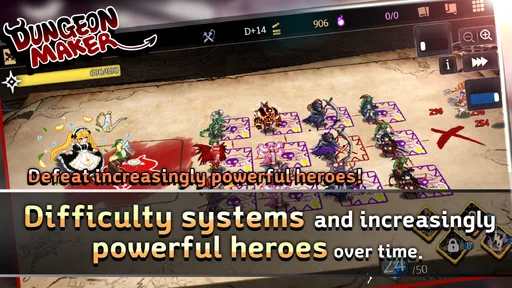
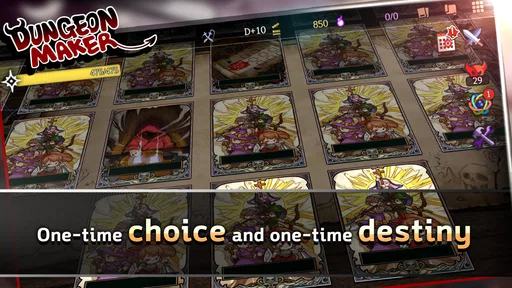
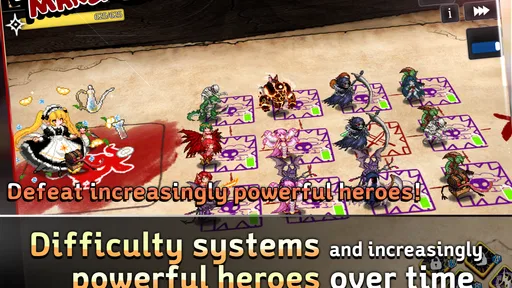
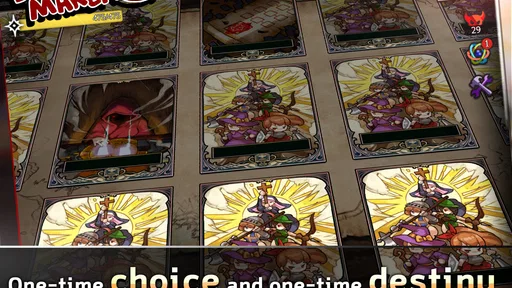
The gameplay is pretty straightforward yet addictive. You start by selecting a Dark Lord, each with unique abilities and traits. This choice can significantly impact your gameplay style, so choose wisely! As you progress, you’ll be placing traps and summoning monsters to keep the heroes at bay. The strategic element here is phenomenal. Balancing resource management with tactical placement is key. There’s a certain satisfaction in watching your meticulously planned dungeon thwart those overconfident heroes.
One of the coolest features is the endless mode. It’s a never-ending wave of heroes, and it’s up to you to hold your ground as long as possible. This mode really tests your skills and strategic thinking. I found myself continuously tweaking my dungeon, trying to squeeze out just one more wave before being overrun.
Why each attempt can teach you something
The useful habit I developed was to change one part of a plan at a time. If I altered my layout, Dark Lord choice, and defenses together, it was hard to tell what had helped. Keeping most of a setup steady while testing one adjustment made the result easier to read and gave each attempt a purpose. That approach is especially handy when a run ends sooner than I hoped: instead of treating it as wasted time, I can identify a weak point and try a different answer next time.
I also found it worth thinking about placement as a connected plan rather than a collection of isolated choices. A trap is only part of the story; the surrounding defenses and the route heroes take determine whether the whole arrangement feels effective. When I was tempted to add whatever seemed strongest, stepping back to consider how the pieces worked together made my decisions more deliberate. That’s the kind of tactical satisfaction this game offers, though it does mean that players who dislike evaluating and revising plans may find the repetition less rewarding.
Good for short sessions, with a caveat
A realistic use case is a quiet break when I have enough time to focus on a run, but not enough to settle into a long story campaign. I can make decisions, see how my defense holds up, and come away with something to reconsider. The caveat is that a strategy game can make “one more try” surprisingly tempting. If I need a distraction that is easy to put down at a precise moment, I’d be cautious about starting a run when I’m already short on time.
It also works better for someone who enjoys learning through outcomes than for someone who wants every attempt to feel like a clean victory. A failed defense can still be useful if I’m curious about what to change. If losses mostly feel frustrating to you, or you would rather have a clearly directed story and a fixed sequence of missions, a conventional campaign-focused strategy game may be a better fit.
How it differs from other strategy games
Many familiar strategy games put me in charge of an army, a settlement, or a hero’s route. Here, the perspective is the distinguishing pleasure: I’m arranging threats and trying to make an invading party’s progress difficult. That reversal makes the planning feel playful and gives dungeon layout a central role. It’s a narrower appeal than a broad strategy game with several kinds of maps and objectives, but it gives this one a recognizable identity rather than making it feel like a standard battle simulator.
Compared with a traditional dungeon crawler, the emphasis is also different. I’m not mainly exploring a maze as a character and reacting to danger room by room; I’m deciding how the danger is arranged and then judging how well the plan holds. If you want direct control over a hero’s moment-to-moment adventure, that distinction matters. If you like designing a defensive problem for opponents to solve, it is precisely the reason to try it.
Visuals and Sound
The visuals in Dungeon Maker are charming and well-crafted. The art style is detailed enough to be engaging but not overwhelming. The animations are smooth, and the design of the monsters and traps is quite creative. The sound design complements the visuals perfectly. It’s immersive without being distracting, with atmospheric dungeon sounds that add to the overall experience.
Learning Curve and Community
Now, let’s talk about the learning curve. It’s quite manageable, even if you’re new to this genre. The game does a good job of easing you in with tutorials and tooltips. However, mastering it is a whole different ball game. The community around the game is fantastic, with plenty of resources and forums where players share strategies and tips. It’s a great way to pick up new techniques and keep your dungeon fresh and challenging.
For a newcomer, I’d resist the urge to copy a supposedly perfect build before understanding why it works. Advice is most useful when I can connect it to a problem I’ve actually encountered: a weak defense, a Dark Lord choice that doesn’t suit my approach, or a layout that needs a different emphasis. Trying suggestions one at a time keeps the learning process manageable and helps me form my own judgment. Players who enjoy experimenting will get more from community discussion than players hoping for a single universal solution.
Replayability and Updates
Replayability is a big win for Dungeon Maker. With multiple Dark Lords to choose from and countless combinations of dungeons, traps, and monsters, the possibilities are nearly endless. The developers are pretty active too, consistently rolling out updates and new content, which keeps the game exciting and fresh. You’ll always have something new to try or a new strategy to test.
The game has an average rating of 4.6 from around 54,000 ratings, and it has passed 500,000 installs. Those figures suggest that plenty of players have been drawn to its particular blend of dungeon planning and defense, though they can’t tell me whether its pace or level of challenge will suit my own habits. I’d put more weight on the central question: do you enjoy building a plan, watching it meet resistance, and refining it when it falls short?
Where the value depends on your taste
The strongest value here is not a long checklist of modes; it’s the repeated decision-making. Picking a Dark Lord, arranging traps and monsters, and seeing how a defense performs gives the game a loop that can stay interesting for a player who likes trying different approaches. The purchase makes more sense to me if I expect to return to that loop, rather than if I’m only curious about the premise for one brief session.
There are trade-offs. The same focus on building and defending a dungeon can make attempts feel similar if I stop experimenting, and the learning process asks me to accept that a promising plan may not last. The optional purchase range is another consideration for anyone who wants strict control over spending after buying a game. I’d set my own limit before playing if I know I’m susceptible to impulse purchases, and judge the base experience on its own rather than assuming extra spending is part of the strategy.
Who I’d recommend it to
I’d recommend it to strategy fans who enjoy arranging defenses, comparing outcomes, and gradually understanding why one setup holds longer than another. It is especially appealing if the idea of playing the dungeon’s mastermind sounds more fun than taking the role of a wandering hero. The Teen rating is worth keeping in mind when choosing a game for a younger player, and the paid entry price makes it easy to decide whether the concept is worth a deliberate purchase rather than a casual free install.
I’d skip it if I wanted a story-led adventure, direct control of a party exploring rooms, or a game where each session reliably ends after a short, predictable interval. I’d also look elsewhere if I dislike revisiting a plan after a defeat or prefer strategy games centered on broad maps, army movement, and changing objectives. Those preferences aren’t flaws in the game; they simply point toward a different kind of strategy experience.
In conclusion, if you’re looking for a game that combines strategy, creativity, and a touch of villainy, Dungeon Maker is a fantastic choice. It’s addictive, challenging, and endlessly entertaining. So, why not give it a whirl? Dive into the world of dungeon creation, and see if you have what it takes to be the ultimate Dark Lord!
Verdict
Strengths of Dungeon Maker
- Engaging gameplay with strategic depth.
- Variety of monsters and traps to choose from.
- Challenging levels keep players hooked.
- Regular updates with new content.
- Offline mode available for uninterrupted play.
Limitations of Dungeon Maker
- Steep learning curve for beginners.
- In-app purchases can be expensive.
- Occasional bugs disrupt gameplay.
- Graphics may feel outdated to some.
- Limited tutorial for complex mechanics.
Other Releases by GameCoaster
View All
Dungeon Defense
Action4.8

Dungeon Squad
Action4.7
Similar Picks in This Category
View All
Clash of Clans
Supercell4.5

Plants vs. Zombies™
ELECTRONIC ARTS3.7

Lords Mobile: Kingdom Wars
IGG.COM4.5

Clash Royale
Supercell4.4

State.io — Conquer the World
CASUAL AZUR GAMES4.1

Car Driving School : Car Games
Spark Game Studios3.9
Frequently Asked Questions
What is Dungeon Maker and what makes it unique?
Dungeon Maker is a strategic rogue-like game where players build dungeons and take on the role of a dungeon master. What sets it apart is its combination of strategy and rogue-like elements, allowing for endless possibilities in dungeon creation and monster management. Each decision impacts the outcome, providing a fresh experience every playthrough.
Is Dungeon Maker free to play or does it have in-app purchases?
Dungeon Maker is a paid app with a one-time purchase price. However, it does offer in-app purchases for additional content and features, which can enhance the gaming experience. These purchases are optional, so players can enjoy the full game without spending extra, but can opt for expansions if desired.
What platforms is Dungeon Maker available on?
Dungeon Maker is available on both Android and iOS platforms. This ensures that players using either type of mobile device can enjoy the game. It is optimized for mobile play, providing a smooth and engaging experience on smartphones and tablets alike.
How does the gameplay of Dungeon Maker work?
In Dungeon Maker, players design and build their own dungeons while defending against heroes who attempt to defeat them. The game combines strategic planning with real-time combat, requiring players to carefully select monsters, traps, and spells to fend off invaders. Each level increases in difficulty, demanding more strategic thinking.
Does Dungeon Maker require an internet connection?
Dungeon Maker is primarily an offline game, meaning it does not require a constant internet connection to play. This makes it convenient for users who want to enjoy gaming on the go without worrying about connectivity. However, an internet connection may be needed for updates or accessing additional content.
Play our best games!


